It's one of the most common questions we get from Australian parents:
"Are toilet training pants just nappies?"
The short answer is no, they're not. But the longer answer is more useful, because "toilet training pants" can actually mean three completely different products at three completely different stages. Get the wrong one for your child's stage and toilet training takes longer, costs more, and feels harder than it needs to.
Here's how to think about it, and how to know which one your child is ready for right now.
The Quick Answer
Modern reusable toilet training has three clear stages, each with a different product designed for what your child is learning at that point.
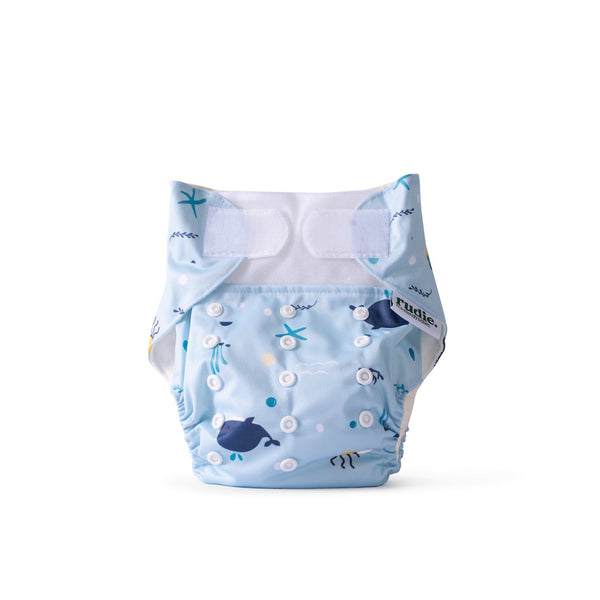
- Stage 1: Dry Start training diaper. Looks like a nappy, works like a nappy, but eco-friendly and reusable. For the very early start to toilet training, when your child is still mostly using a nappy but you're introducing the language and routine.
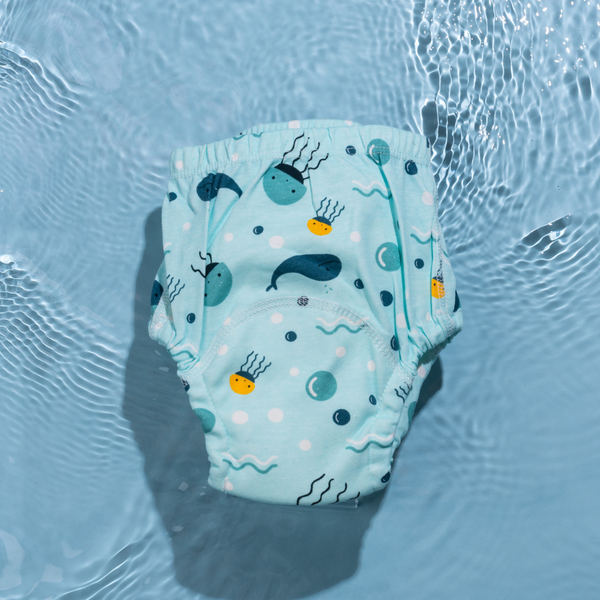
- Stage 2: Training pants. Pull-up style, absorbent core inside soft fabric. Catches accidents but lets your child feel wet so they learn the connection. The middle stage, where most of the actual training happens.
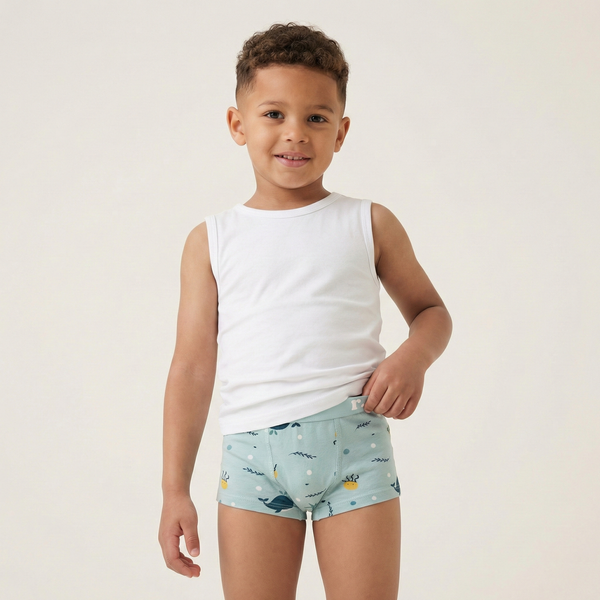
- Stage 3: Training underwear. Looks and feels like regular undies, with a small absorbent layer for the occasional miss. The final step before normal underwear.
If your child is still in a disposable nappy and showing zero interest in the toilet, you're at the start of stage 1. If they're dry most days but still have the occasional accident, you're in stage 3. Most children spend the longest in stage 2.
Stage 1: Dry Start Training Diaper

The Dry Start training diaper is the gentlest possible introduction to toilet training. It still works as a full nappy, so you're not setting yourself up for accidents on day one. But it's the moment you start using the language: "let's go to the toilet," "are you wet?", "do you need to do a wee?"
This is what makes it different from a regular disposable nappy:
- Reusable. One Dry Start replaces around 200 disposables. Better for landfill, better for your weekly budget.
- Stay-dry inner. Wicks moisture away from skin so baby is comfortable, but you can still talk about what just happened together.
- One-size adjustable. Fits from about 5 to 17 kg with adjustable snaps, so it grows with your child through this whole stage.
- Cute prints. Children get excited about putting on their "big kid" nappy in a print they chose themselves.
How long does this stage last? Anywhere from a few weeks to a few months. It depends entirely on your child. Some children are ready to move to stage 2 by 18 months. Others are happiest in stage 1 until well after 2.
"We used Dry Start for about three months before we even attempted real toilet training. By the time we moved to training pants, my daughter already knew what 'wee' and 'poo' meant and could tell me when she'd done one. It made the next stage so much easier."
Kayla, MelbourneStage 2: Training Pants

This is the stage that matters most. Training pants are designed to do something a nappy can't: let your child feel wet when they have an accident.
That uncomfortable, "oh, that's not right" feeling is what builds the connection between needing to go and getting to the toilet. Without it, the body just keeps treating wee as something that happens passively, the same way it does in a nappy. The accident is the lesson.
What training pants do well:
- Absorb a full accident. Five seconds of full bladder release stays inside the pants. No puddles on the carpet, no soaked car seats. We tested this so you don't have to.
- Feel wet right away. No stay-dry layer here on purpose. The cotton-jersey lining lets your child notice straight away.
- Pull on and off like undies. Critical for self-toileting. Your child learns to pull them down before going and back up after.
- Reusable. A pack of 5 replaces around 1,000 disposable pull-ups over the training period.
Children typically need 5 to 10 pairs of training pants at this stage. Accidents happen multiple times a day at first, so you're cycling through them quickly. Most parents find a mix of fun prints works best, your child gets a sense of ownership when they pick which Whales or Unicorns pair to wear that morning.
"The first week was a disaster. Wet pants three times in a morning. By week two she was telling me before she went. By week four we'd had two dry days in a row. We never could've done that with pull-ups, she'd have just kept weeing in them like a nappy."
Sarah, PerthStage 3: Training Underwear

By the time your child is dry most days but still has the occasional accident, training pants start to feel too thick. They want to wear "real" undies like older siblings or kids at daycare. That's the cue for stage 3.
Our toilet training underwear sits in the gap between training pants and regular undies. It looks and feels almost identical to normal kids' underwear, but with a thin, soft absorbent layer in the gusset that catches small accidents (the dribble after a sneeze, the "I almost made it" moment, the unfamiliar daycare loo).
Why this matters:
- Confidence. Your child looks and feels like a "big kid." They want to keep them dry.
- Insurance. A small accident doesn't end up running down their leg in front of class.
- Discreet. No bulky waistband, no plasticky feel. Pairs perfectly with shorts, leggings, dresses.
- Soft and skin-friendly. Cotton outer, with sizing that fits 2 to 6 year olds.
Most children stay in stage 3 underwear for a few months, until accidents have stopped completely both day and night. From there, regular underwear is fine. Just remember that night-time dryness is a separate developmental milestone that has its own timeline, often a couple of years behind daytime training.
So Are Training Pants Nappies or Not?
Here's the honest distinction:
- A nappy is designed to keep your child dry and comfortable for hours at a time. It's a containment product.
- Training pants are designed to teach. They catch one accident, but they let your child feel it. They're an education tool that happens to also be absorbent.
A pull-up disposable sits awkwardly in the middle. It's marketed as training, but it's engineered like a nappy. That's why parents who switch to reusable training pants almost always see toilet training speed up. The product is doing a different job.
How Do I Know When to Progress to the Next Stage?
There's no exact age. There are signals.
Stage 1 → Stage 2: Your child can tell you (with words, signs, or by pulling at their nappy) when they've done a wee or poo. They're showing curiosity about the toilet or potty. They can stay dry for an hour or so between changes.
Stage 2 → Stage 3: Most days are accident-free. Your child is telling you BEFORE they need to go. The training pants are coming off mostly dry at the end of the day.
Stage 3 → Regular underwear: No accidents for two to three weeks straight, daytime. (Night-time is separate.)
Don't rush. Going backwards a stage when there's been illness, a new baby, starting daycare, or any major change is completely normal and not a setback. The product range is designed for you to move up and down as your child needs.
Common Questions
Can I skip a stage? Yes, some children go straight from disposable nappies to stage 2 training pants without needing the Dry Start. Others need every stage. Both are normal.
How many of each do I need? A starter set looks like 3 to 5 Dry Start diapers, 5 to 8 training pants, and 5 to 8 training underwear. You won't use them all at once, you'll cycle through whichever stage you're in.
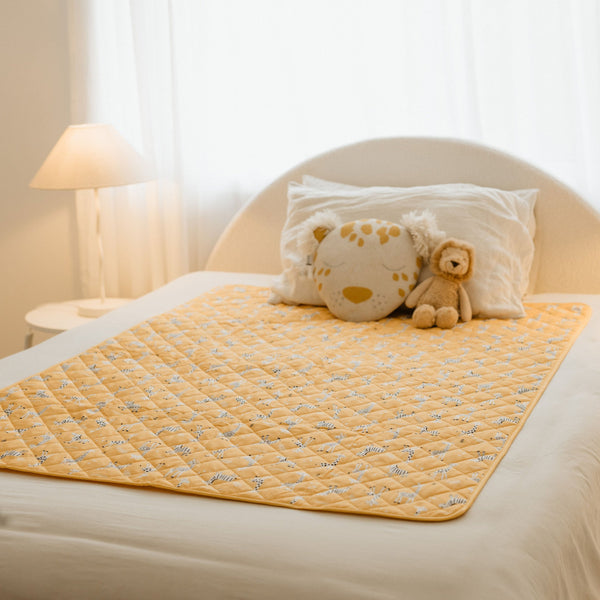
What about overnight? Use a Dry Start training diaper at night for now, even after your child has moved to stage 2 or 3 during the day. Pair it with a leakproof Bed Guard on top of the sheet so the inevitable overflow stays off the mattress.
Are they really better than disposables? Environmentally, hugely. A reusable pack replaces 1,000+ disposables. Cost-wise, you break even after about 6 weeks. And from a training perspective, the "feel wet" mechanic is unmatched.
The Three-Stage System, At a Glance
| Stage | Product | When to use | Typical age |
|---|---|---|---|
| 1 | Dry Start training diaper | Pre-training, introducing language and routine | 12 to 24 months |
| 2 | Training pants | Active training, learning the connection | 18 months to 3 years |
| 3 | Training underwear | Mostly dry, small accidents only | 2.5 to 5 years |
Ready to Start?
If you're not sure exactly which stage your child is in, that's fine, most parents aren't. The easiest way is to start with the one that matches your gut, and have the next stage on hand for when they're ready. Children rarely move backwards once they've taken a step forward.
You can build your own bundle of all three stages and save when you mix and match. Or browse the full Rudie Baby range to find your starting point.
Got a question we haven't covered? Get in touch, we answer every parent ourselves.